
How Base and Drainage Affect Asphalt Driveways in Kansas City
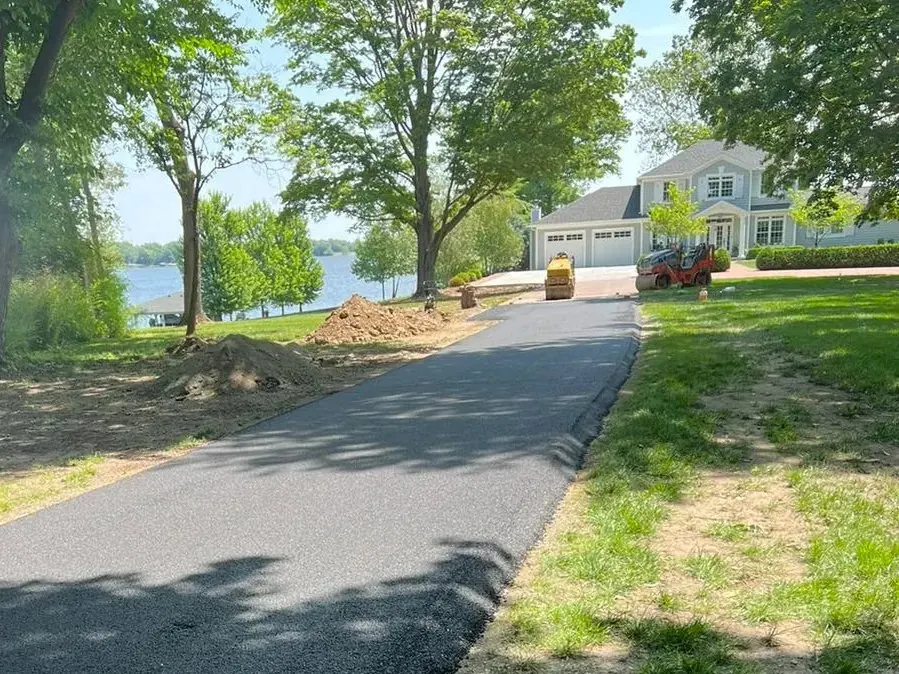
Asphalt driveway base and drainage problems usually show up as soft spots, puddles that return in the same place, and cracks that reopen after patching. If you see those signs on a drive in Kansas City, the trouble may be under the surface, not in the asphalt itself. A new top layer over a weak base or a wet low spot tends to fail the same way the old one did.
What the base and drainage do
The base is the compacted layer of stone under the asphalt. It carries the weight of your vehicles and spreads that load over the ground below. Asphalt on top is the wearing surface, but the base does much of the structural work.
Drainage is how water leaves the driveway. A good setup moves rain and snowmelt off the pavement and away from its edges so water does not collect on top, along the sides, or beneath it. Water that sits against a base can soften the ground under it, and soft ground does not hold a load well.
If your lot has clay soil, which holds water longer than sandy ground, or your drive slopes toward the house, ask any contractor how water will be directed. A good answer covers the slope of the finished surface and where the runoff goes, not just the thickness of the asphalt.
Signs the problem may be below the surface
Surface wear and base trouble can look alike at first. The table below separates what you might see from what it can point to. None of these confirm the cause on their own, but they tell you what to ask about.
| What you see | What it can point to |
|---|---|
| Soft or sunken area that gives under foot or tires | Movement or loss of support beneath the asphalt |
| Puddles that return in the same spot after rain | A low area, or a water path that needs attention |
| Cracks that reopen after patching | More than one cause, including water reaching the base |
| Edges that crumble or drop away | Weak edge support or water running along the pavement |
| Fine cracks across the whole surface | Age and sun wear, often a surface issue |
Why soft spots matter most
A soft spot is rarely just a surface flaw. It often means the layers below have shifted, got wet, or were never compacted well. Patching the top without finding out why it softened usually brings the problem back.
Why standing water is worth a look
Water on asphalt is not harmless just because the surface looks sound. A puddle that remains after rain may indicate a drainage issue. Over time that water may find cracks and edges and work down toward the base.
Why Kansas City weather can add stress
Kansas City winters bring snow and freeze thaw cycles. Water enters a crack, freezes, expands, and opens the crack a little more. When it thaws, more water gets in. A driveway with weak support or poor drainage gives that cycle more to work with.
Rain can show you where water sits or runs across the drive. Watching the driveway after a storm may help you identify drainage concerns. Spring thaw is another time when soft spots may show themselves.
Conditions vary a lot from one property to the next. A drive that climbs to the street sheds water differently than one that dips toward a garage, and clay soil behaves differently than well drained ground. Symptoms alone cannot confirm the state of the base, which is why a look in person matters. The same questions apply whether the driveway is in Kansas City, Independence, Lees Summit, or Shawnee.
What to check before choosing a paving approach
Before you call anyone, spend a rainy day and a dry day looking at the drive. Write down what you see.
- Note where water stands and how long it stays after rain stops.
- Mark where the pavement feels soft or looks sunken.
- Check whether cracks return in the same areas after sealing or patching.
- Look at where water goes at the edges, and whether it heads toward the house, the garage, or the street.
Then ask a paving contractor to assess the base, the slope, and the water path before recommending work. The answer shapes the choice between a repair, a resurface, or a full replacement. A thorough asphalt driveway paving job starts with that assessment, and the same goes for any residential asphalt paving project on a home property.
If the base is sound and the problem is water on the surface, regrading or a corrected slope may be part of the fix. If the base has failed in places, those areas usually need to be dug out and rebuilt, not covered over. Ask the contractor to explain which one they see and why.
We offer a Free Estimate on driveway work across the Kansas City area. Ask whether you can discuss your notes on where water stands and where the pavement feels soft during your estimate.
Common questions
Why does my asphalt driveway have soft spots?
Soft spots often mean the base under that area has shifted, stayed wet, or was not compacted well. Cutting out and rebuilding the weak area is usually more lasting than patching the surface.
Is standing water on an asphalt driveway a problem?
It can be. Water that sits after rain points to a low spot or poor runoff, and it can work into cracks and edges over time. A small dip may be fixable with regrading, depending on what is under it.
How does drainage affect asphalt driveway life?
Pavement that sheds water tends to last longer than pavement that holds it, because less moisture reaches the base and freeze thaw cycles have less to act on. Slope, edge conditions, and soil all play a part.
Areas we serve
Our services
Have a question about your project? Call (816) 301-9555