
Commercial vs Residential Asphalt Paving in Leavenworth
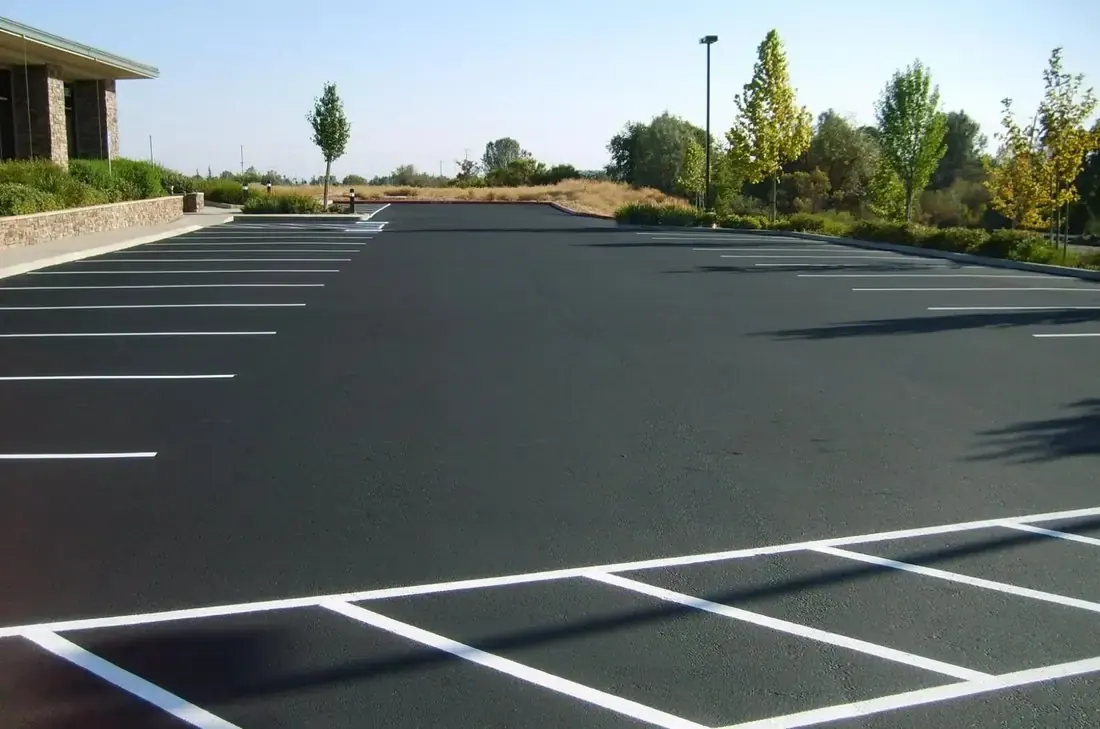
Commercial paving differs from residential paving mainly in who uses the surface and how hard they use it. A home driveway carries a few household vehicles. A business lot in Leavenworth carries customers, staff and deliveries, often while the doors stay open. The material is the same hot asphalt, but the base, the layout and the work plan change.
How commercial and residential paving needs differ
Residential paving usually centers on one job: getting your household vehicles from the street to the garage or parking pad. Our residential asphalt paving work focuses on that daily use, plus how the surface meets the street, the garage and the yard.
Commercial paving has more people to serve. Commercial asphalt paving has to account for business traffic, turning room for larger vehicles and a plan for keeping needed access open while the crew works. A shop that loses its entrance for a day loses customers, so the schedule matters as much as the surface.
Picture a small shop with a single entrance. If the crew closes it for a full day, customers keep driving past. A workable plan might pave one half of the lot, reopen it, then finish the other half. A homeowner faces a simpler version of the same problem and can usually park at the curb for a day or two.
What both jobs share is the foundation. Every asphalt surface sits on a base, the compacted layer of stone and soil underneath. If the base is weak or holds water, the asphalt on top will crack and sink no matter how good the mix is.
What changes the project scope
Scope comes down to three things: the vehicles, the traffic pattern and the area. A driveway sees cars and pickups that park for hours. A lot sees constant starting, stopping and sharp turning, and the heaviest loads usually concentrate at entrances, delivery areas and trash pickup spots. Those are the places where a thin or poorly compacted section shows wear first.
| Factor | Residential driveway | Commercial lot |
|---|---|---|
| Typical vehicles | Cars, pickups, the occasional trailer | Customer cars, staff vehicles, delivery trucks |
| Traffic pattern | A few trips a day | Steady flow, with peaks at open and close |
| Access during work | Park at the curb for a day or two | Phased work so entrances stay usable where possible |
| Layout concerns | Width, slope to the street, turnaround | Entrances, travel lanes, parking stalls, drainage across a larger area |
| Base and asphalt layers | Planned for household loads | Planned for heavier, more frequent loads |
For a parking lot, ask how entrances, customer parking and staff access fit into the sequence of work. Our asphalt parking lot paving estimates cover that kind of planning, because a lot can often be done in sections.
Questions to ask about any proposal
Ask what the proposal says about the base, the crown and the asphalt layers. The crown is the slight slope in the surface that moves water off to the edges. Without it, water sits, soaks into the base and breaks the pavement down from underneath.
Also ask whether the layer plan matches your use. A lot with daily truck traffic should not be quoted like a driveway that sees two family cars. If two bids for the same lot look very different, compare the base work and the number of layers first, since that is usually where the gap comes from.
Finally, ask where the water goes. A large lot gives rain a long way to travel, so low spots and edges deserve a look before anyone mixes a batch of asphalt.
Paving conditions around Leavenworth
Kansas City area winters usually swing between thaw and hard freeze. Moisture that sits in a crack in January or February can expand when it freezes and widen the opening a little more each time. That is why drainage and a solid base matter on any property here, residential or commercial.
Timing is the other local factor. Asphalt needs to be placed warm and on ground that is not frozen, and weather in November and December can run from mild to cold within a single week. Late-season paving windows can close quickly, so confirm timing against actual site and weather conditions rather than the calendar.
The same questions apply to a property in Leavenworth, Platte City or Saint Joseph. If your lot sits low, collects water after storms or has clay soil, tell the estimator. Those conditions can change how much base work the job needs.
What to clarify before choosing a paving plan
A few notes before you call will make the estimate more accurate:
- Write down every type of vehicle that uses the pavement, including deliveries and trailers.
- List the access your household or business has to keep during the work, such as one open entrance or garage access by evening.
- Ask which work is included: base repair, grading, the number of asphalt layers and cleanup.
- Note the condition of the existing surface, including cracks, low spots and standing water.
Share those notes when you request a Free Estimate from KC Asphalt Paving, and we can show you how the proposed layout and layers fit your use.
Common questions
What is the difference between commercial and residential asphalt paving?
The material is similar, but commercial work plans for heavier and more frequent traffic, larger areas and business access during construction. Residential work centers on a driveway used by household vehicles.
Can a business stay open while a parking lot is paved?
Often the work can be done in phases so at least one entrance and some parking stay usable. It depends on the lot layout, so ask for the access plan before you agree to a schedule.
Does a commercial lot need a different base than a driveway?
Heavier traffic usually calls for a stronger base and asphalt layer plan. The proposal should state what is being done under the surface, not just what goes on top.
Areas we serve
Our services
Have a question about your project? Call (816) 301-9555